
“Be careful, however, that the exercise of your rights does not become a stumbling block to the weak.” – 1 Corinthians 8:9
Robert throws a big Super Bowl party every year. Wings, nachos, loud friends, and a cooler full of beer – it’s tradition. People look forward to it. It’s one of the things he’s known for.
This year, though, something’s different. He invites his buddy Matt – an old friend from college who’s been open about his past struggles with alcoholism. Matt’s been sober for a while now, and he’s doing well. Still, Robert knows the road hasn’t been easy for him.
So he makes a quiet decision: no alcohol at the party this year.
Now, he knows some people might roll their eyes. Maybe it’ll change the vibe. Some may be so disappointed that they leave when they discover that the beer in the cooler has been replaced with soda and sparkling water. The most important thing, as far as Robert is concerned, is that Matt feels welcome, safe, and included without having to explain himself or feel on guard the whole night.
Of course, Robert had every right to serve alcohol. But he gave up that right out of love. Not because it was wrong, but because it wasn’t helpful. Because his friend mattered more than the mood of the party.
In a roundabout way, the above scenario illustrates the point that the apostle Paul is making in 1 Corinthians chapter 8.
Whether to eat meat that had been sacrificed to idols was a real problem in the pagan city of Corinth. Most meat in the markets there had been sacrificed to idols when butchered. The “stronger” (more mature and knowledgeable) Christians saw it as good meat, as idols meant nothing to them. But for the “weaker” Christians (those who were new in their faith) they considered consuming this meat as an act of idol worship.
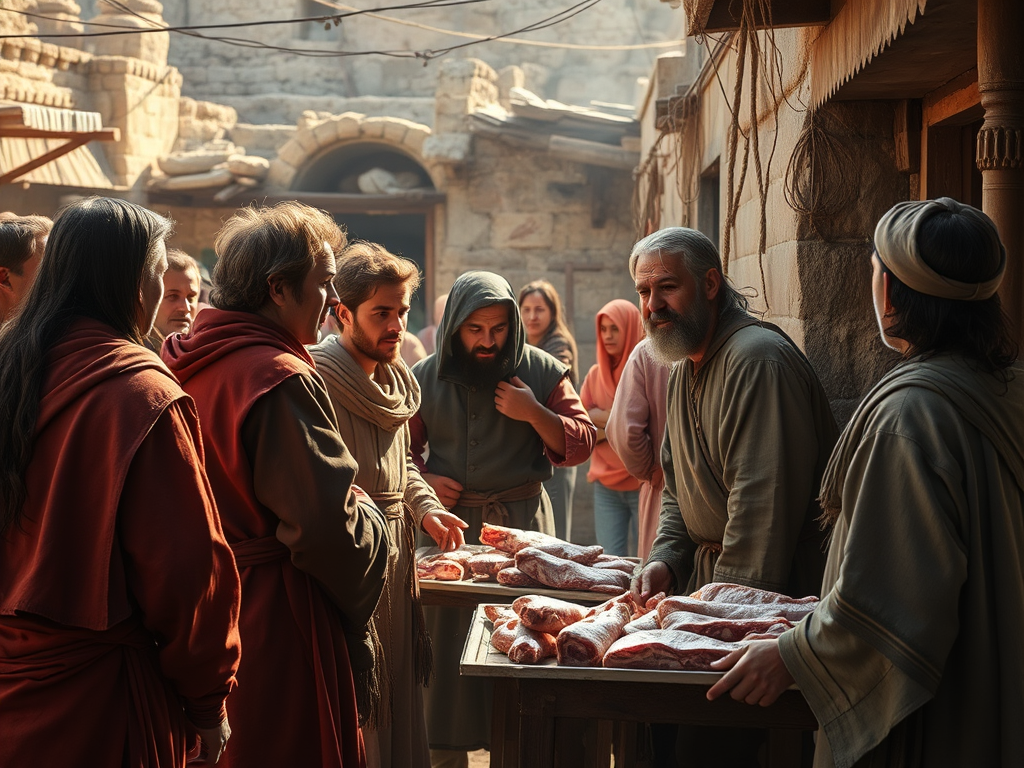
Paul makes it clear that the welfare of the “weaker” brother or sister in Christ should be a “stronger” Christian’s primary concern, and that they shouldn’t use their spiritual knowledge as a badge of freedom. Although they knew that idols weren’t real and that eating meat offered to them wasn’t sinful, not everyone had that same understanding; some were new to the faith, still sorting through their past and shedding old habits and beliefs.
Paul is essentially telling them, “Sure, you’re free to eat that meat… but if your freedom leads them back into confusion or sin – you’re not acting in love.”
What Robert did as the host of his Super Bowl party is exactly the kind of love Paul is describing. It’s not dramatic. It’s not loud, it’s just thoughtful. And it’s powerful.
As for how we should apply Paul’s teaching: It’s always good for me to think about who my example is influencing. Where might God be calling me to be more mindful of the influence that my attitude and actions have with my younger brothers in Christ?
Just because something might not be sinful doesn’t necessarily mean that it’s always good or helpful.
 Former Blackout Artist